
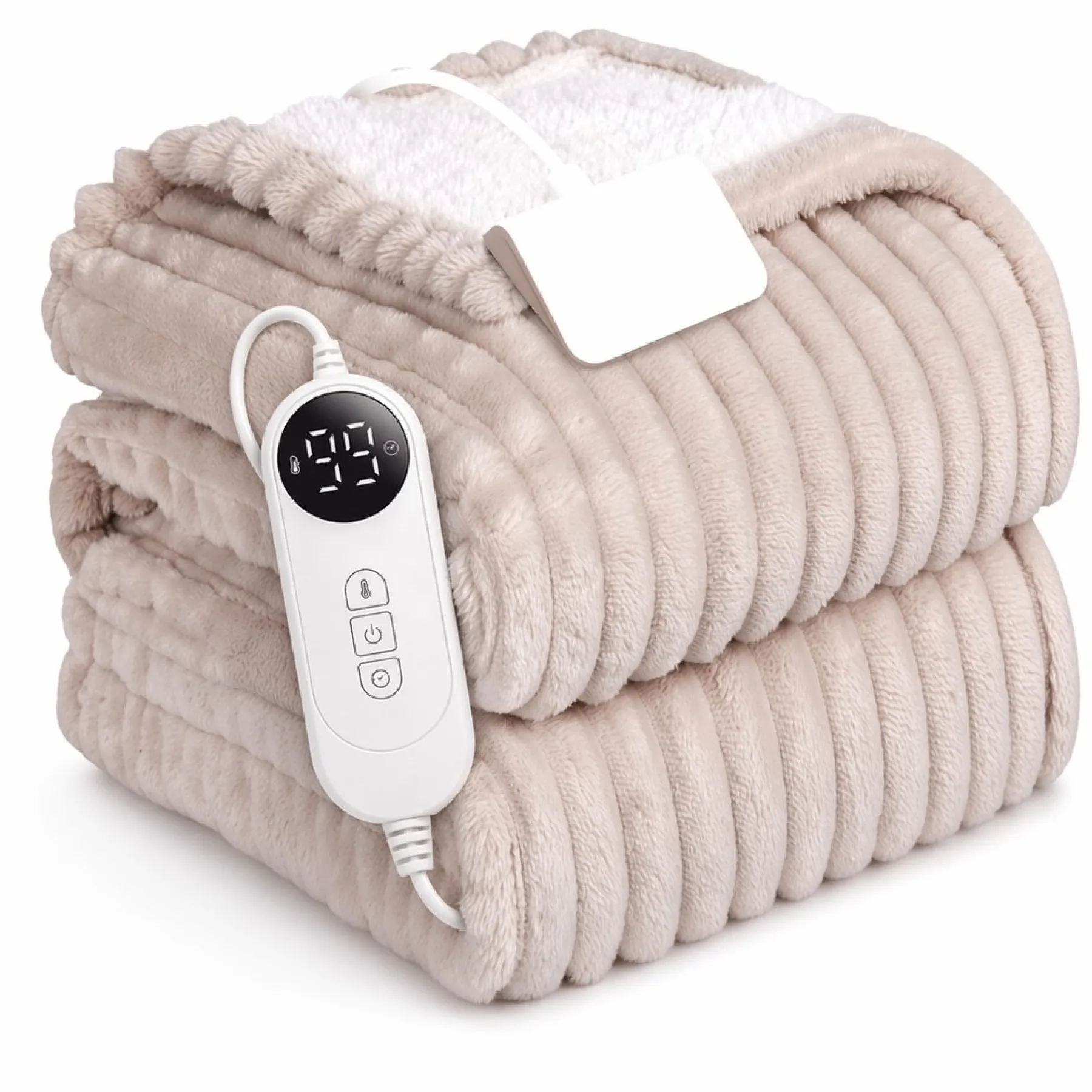
How does the running cost comparison work?
Illustrative calculation only: 4 hours per day for 30 days, with continuous electrical input at the stated wattage. USD 0.20/kWh and EUR 0.30/kWh are example tariffs, not current national averages. These are not Cozynest product ratings or equivalent levels of room heating.
| Appliance example | Input W | kWh/day | kWh/30 days | USD/month | EUR/month |
|---|---|---|---|---|---|
| Electric blanket | 100 | 0.4 | 12 | 2.40 | 3.60 |
| Electric space heater | 1500 | 6.0 | 180 | 36.00 | 54.00 |
| Air conditioner in heat-pump heating mode | 1000 | 4.0 | 120 | 24.00 | 36.00 |
Daily kWh = watts × hours ÷ 1,000. Monthly cost = daily kWh × days × tariff. Thermostat cycling, settings and room conditions change actual consumption. The air-conditioner input is not its heat output; a blanket warms a person, while the other examples heat a room. This table is only an illustrative cost comparison.
Method reference: U.S. EIA: measuring electricity. Use your own tariff and the exact appliance label or measured input.
Which use case fits each product?
| Question | Electric blanket | Electric space heater |
|---|---|---|
| Heating target | The user in the intended position | Air and surroundings within the room |
| Best brief to define | Coverage, placement, controls and care | Room conditions, positioning and required heating |
| What cost alone misses | Does not maintain the whole room temperature | May be unnecessary when only local warmth is needed |
| What to check | Exact model instructions and evidence | Clearances, electrical supply and operating instructions |
These are use-case distinctions, not a recommendation to leave a room inadequately heated. Personal comfort, the setting and the instructions all matter. Heat-pump air conditioning is a separate room-heating approach and cannot be ranked by electrical input alone.
How do the safety conditions differ?
| Review point | Electric blanket | Electric space heater |
|---|---|---|
| Condition | Check textile, cable and controller against the instructions | Check the appliance, cord and intended placement |
| Placement | Use only in the specified position; avoid unsupported folding or covering | Keep combustible materials at least three feet away |
| Power | Follow the exact model instructions | Plug directly into a wall outlet, not a power strip or extension cord |
| Sleep | Do not assume overnight use is permitted | Turn portable heaters off before sleeping |
| Evidence | Match blanket model and tested configuration | Match heater model, operating conditions and required evidence |
Sources: CPSC portable-heater safety guidance and Electrical Safety First’s blanket guidance. These precautions do not establish that one category is universally safer.
What should a retail buyer put in the specification?
Define the intended warmth or heating task before discussing price. For a textile heating range, document the format, dimensions, fabric, controls, destination market and care instructions, then match claims to the approved sample and evidence.
For a private label project, use the electric blanket manufacturer brief. MOQ is 500 pieces, sample arrangements are discussed per project and the confirmed delivery lead time is 15-20 days for the blanket programme. These are commercial terms, not appliance performance ratings.
Is an electric blanket cheaper to run?
For the illustrative inputs here, the 100 W blanket uses less electricity than the 1,500 W heater over the same four hours. That comparison holds only for those assumptions. Actual settings, control cycles and tariffs change the bill, and local warmth is not equivalent to heating an entire room.
How do I use my own electricity rate?
Multiply the appliance’s electrical input in kilowatts by operating hours, then multiply the result by your tariff per kilowatt-hour. Use the currency and variable rate from your bill. Replace the example input with the actual label rating or measured consumption, and keep any fixed account charges separate.
Is air conditioning always more expensive?
No universal conclusion follows from this example. A heat-pump system moves heat, and its electrical input is not the same as its delivered heating output. Compare the actual system, room conditions and operating pattern. A personal warming blanket and a room-heating system are not equivalent substitutes based solely on wattage.
Where can I check blanket care and safety questions?
Start with the instructions for the exact model, then review any applicable official safety notices. For buyer review, keep the model, controller, care label and test evidence together. General advice can help frame the questions, but it cannot replace the approved instructions or establish a new product claim.
See the 12 electric blanket safety and running-cost answers.