Private Label Heating Pads: What to Specify Before Sampling
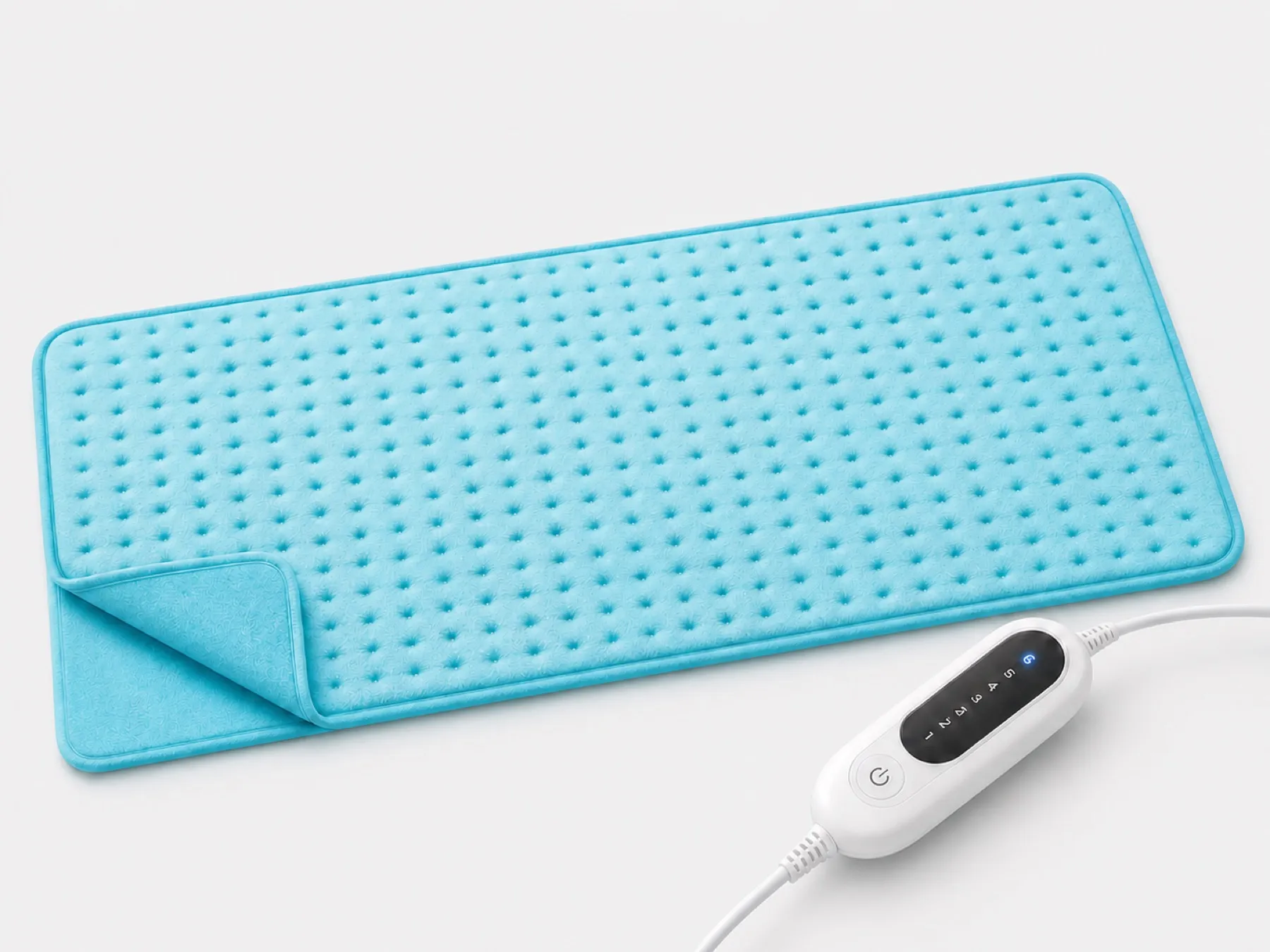
Before requesting a private label heating pad sample, tell the supplier where it will be sold, which catalog format you want to start from, and what must be represented in the sample. Send a finished size and tolerance, cover construction, matched controller and power configuration, and a list of labels and documents to review. Ask the supplier to flag any parts of the sample that will differ from the proposed production version.
Decide what the first sample needs to prove. A fabric or fit sample can settle color, feel and dimensions while the electrical configuration is still under review. If the sample will be used to approve the product for production, ask for the proposed pad, controller, cord and plug as a matched set, along with the specification revision. A sample that arrives with a temporary controller should be recorded as such so its approval stays limited to the features you actually reviewed.
Choose a catalog reference and define the finished size
Start with an existing format to give both teams the same reference for the quote. The Cozynest heating pad range includes a 30 × 60 cm black plush pad (reference 10000045752581), a 12 × 24 in double-sided flannel pad (1601932088339), and a 20 × 24 in pad with a cover (1601841220982). These references describe listed formats. Confirm the exact materials, cover design and power configuration for the sample.
Choose one controlling unit and say whether the measurement applies to the pad, the removable cover or the assembled product. Agree how to lay out the sample and where to measure it, then record the tolerance in the same unit. For example, 12 × 24 in converts to 30.48 × 60.96 cm using the exact inch conversion. If you want the finished item to measure 30 × 60 cm, write that as the target and have the supplier quote it separately. NIST inch-to-centimeter conversion.
Send a sample brief the supplier can confirm line by line
| Item | What the buyer sends | What to review on receipt |
|---|---|---|
| Market and product reference | Destination, intended use, catalog reference and estimated order quantity. | Sample ID, proposed formal model and the list of requested changes. |
| Finished dimensions | Target width and length, controlling unit, tolerance and the part that must be measured. | Recorded measurements and the fit of the assembled pad and cover. |
| Fabric and cover | Face and reverse fabric, color reference, fixed or removable cover, and preferred closure. | Material and color, fit around the pad, closure position and separate care instructions where applicable. |
| Controller and power | Destination, requested interface, timer behavior, cord placement and plug configuration. | Controller and pad identifiers, rating label, plug and cord, and the documented behavior of the supplied configuration. |
| Label, instructions and pack | Brand artwork revision, required languages and proposed contents of the retail pack. | Sample labels, instructions, included parts and any artwork or packaging still awaiting approval. |
| Documents and sign-off | Documents needed for the destination and the features this sample is intended to approve. | Which exact model and configuration the documents cover, what was approved and which items require a second sample. |
Check the cover and the electrical configuration separately
For a removable cover, ask the supplier to identify how it opens, which direction the pad goes in and how the cable exits. Check whether the assembled cover sits flat and whether it can be removed and refitted as described. Ask for care instructions for each component. An instruction for the textile cover does not establish how the powered pad can be cleaned. Confirm which wording will appear on the label and in the manual before approving artwork.
Record the controller identifier, the pad model and the market-specific rating label together. Request confirmation of the available settings, timer and cord options for that pairing. If the controller, cord, plug or rating changes after sampling, ask what needs to be checked again and which documents still cover the revised configuration. A catalog reference identifies a starting product for discussion. Use the formal model and the final configuration for document review. Controller review and change records.
IEC 60335-2-17 describes a scope that includes certain flexible electric heating appliances and their supplied control units. Confirm the applicable requirements and edition with your compliance team or test lab for the destination and exact product. The U.S. CPSC has also used identifiers on both heating pads and controllers to distinguish models in a recall. Keeping photos of both labels gives purchasing and quality teams a common record when reviewing a change. IEC scope · CPSC model identification example.
Record exactly what the sample approval covers
Save the sample ID, dated photos, measured dimensions and the revision of the specification used for review. Give each item a decision: approved, revise, or pending evidence. For example, record that color and cover fit are approved while the final controller and label are still pending. Assign someone to close each open item and agree whether they can approve it from documents or need another physical sample.
Before confirming the production order, ask for a final specification that ties the selected fabric, pad, cover, controller, packaging and documents to the same product configuration. Use that revision for the purchase order and retain an approved reference sample so the team can compare incoming units against the same decision.
Send your heating pad sample brief
For an initial quotation, share the destination, catalog reference or target format, estimated quantity and any changes you want to see in the sample. Include the required decision date if your retail artwork or range review depends on it.