Blog / Product dimensions
Heated Throw Sizes: Inches, Centimeters and Sample Tolerances
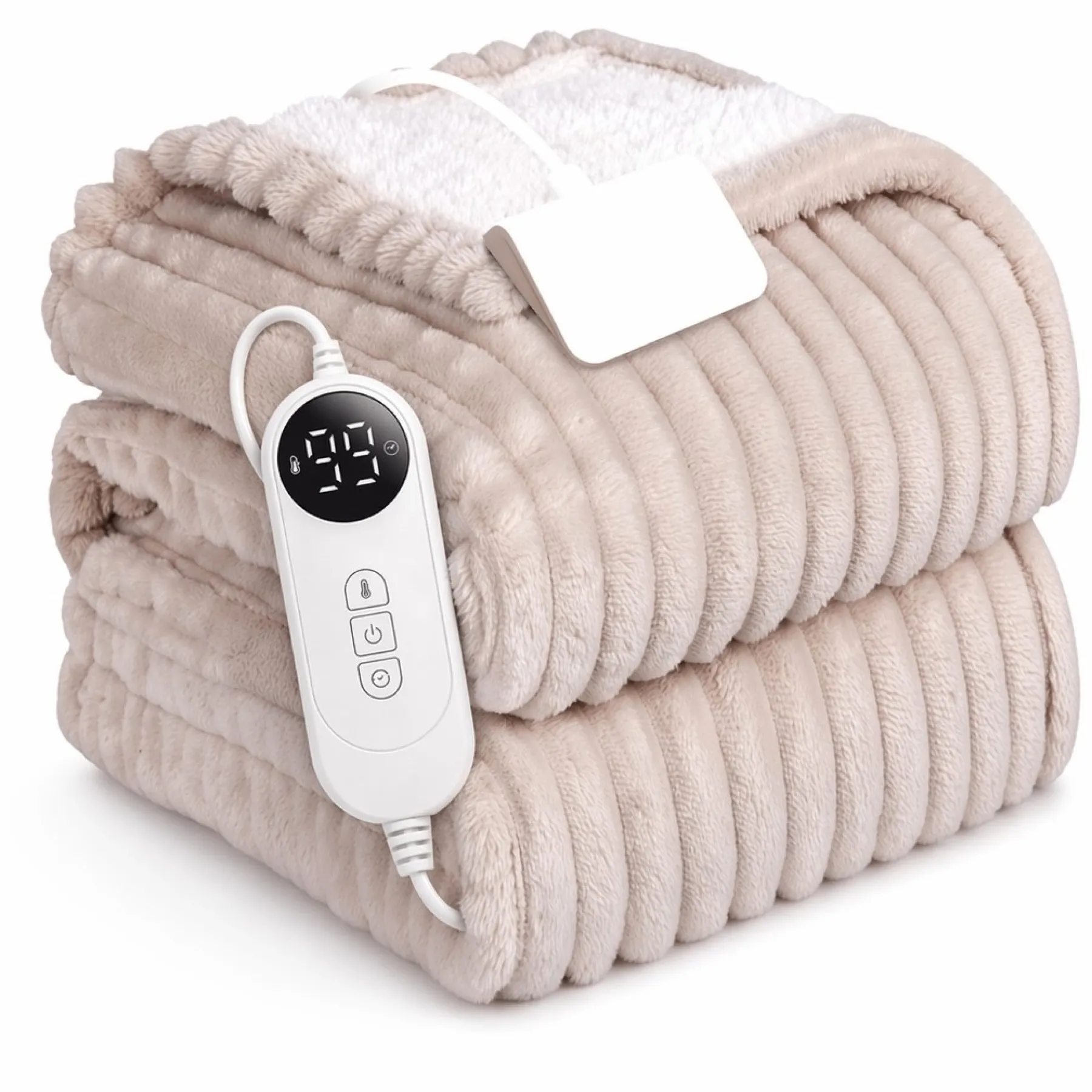
For a heated throw purchase order, specify the finished width and length, the unit, the measurement method and the accepted tolerance together. Keep these separate from heating coverage and folded packaging dimensions. A familiar size name or an exact unit conversion does not replace an agreed sample specification.
This guide helps brand and sourcing teams turn a catalog size into a repeatable inspection instruction. It does not prescribe a universal tolerance or suggest that changing a blanket’s dimensions leaves its electrical design or document scope unchanged.
1. Start with finished dimensions, not a retail size name
Terms such as throw, oversized and king can help describe a retail collection, but they do not tell the factory exactly where to measure. Write the intended width and length as numbers, with the unit beside both dimensions. Identify whether the dimensions include the edge finish and any decorative trim.
Review the heated throw references against the use you intend to merchandise. A sofa throw and a large lounge blanket may need different coverage, but a larger listed textile does not establish a larger heated area. Ask for the dimensions applicable to the actual quoted assembly before approving the product description.
2. Convert once and keep a controlling unit
NIST identifies one inch as exactly 2.54 centimeters. Multiply each inch dimension by 2.54; do not convert the product of width and length as though it were a length. For this article’s example sizes, the figures below are mathematical equivalents, not additional factory specifications. Source: NIST, SI Units – Length.
| Inch dimensions | Exact centimeter equivalent | Buyer decision still required |
|---|---|---|
| 50 × 60 in | 127 × 152.4 cm | Finished-size definition and accepted tolerance |
| 60 × 80 in | 152.4 × 203.2 cm | Whether the label uses exact or agreed rounded figures |
| 72 × 84 in | 182.88 × 213.36 cm | One controlling unit for production inspection |
Record one controlling unit on the specification sheet. If a centimeter label is rounded for display, explicitly agree the display value and confirm how it relates to the controlling dimension. Do not silently change the manufacturing target to match an attractive whole number. A metric-only target such as 130 × 160 cm should be reviewed on its own terms, rather than described as identical to an inch-size reference.
3. Keep four different measurements separate
A dimension disagreement often starts when two people measure different things. Use named fields rather than one unlabeled “size” box:
- Finished textile size: the agreed outside width and length of the completed product.
- Heated area: the model-specific coverage shown in the approved technical information, which must not be inferred from the outside edges.
- Component placement: the position of the connector, controller lead and relevant openings relative to named edges.
- Packed size: the dimensions of the agreed folded product and its packaging, confirmed through a packing trial.
A flat textile measurement cannot confirm the heating-wire layout. Equally, a carton dimension cannot demonstrate the finished blanket size. Keep the inspection record clear about which field was checked and which documents remain outstanding.
4. Agree how the sample will be measured
Before comparing samples, ask the supplier and inspection team to use the same written method. Define the product state, measuring surface, orientation and treatment of the edges. Specify whether the product should be laid flat without stretching, and how folds or a non-rectangular edge are handled. These are points to agree, not a claim that every material behaves in the same way.
Use a sketch or photograph to identify measurement points A–B and C–D. Keep the measuring device, sample identification and relevant conditions in the inspection record. If the team proposes a conditioning period or a special method, document that agreement before using it to accept or reject an order.
Do not make an improvised washing or energized-use trial part of a dimension check. Any after-care measurement needs the model’s permitted care process and a separately agreed procedure. Review the product instructions with the responsible technical team rather than transferring care directions from another blanket.
5. Set tolerances in writing before approving the sample
Ask the supplier which finished-size tolerance it proposes for the chosen construction. Discuss whether width and length need separate acceptance limits, how many units will be checked, and what happens when a measurement falls outside the agreed range. Do not substitute a generic percentage found online for a negotiated production requirement.
A practical approval sheet can contain: nominal width, nominal length, controlling unit, edge definition, measurement method, accepted limits, sample revision and approver. Leave undecided fields marked “to confirm.” A signed reference sample alone may leave the measurement method or acceptance limits ambiguous unless those details accompany it.
6. Treat a size change as a product review
When requesting a different finished size, ask the supplier to review the complete proposed configuration: textile construction, heating arrangement, controller, connector location, care information, packaging and applicable model documents. A catalog reference is a commercial starting point, not proof that the requested variant is covered by an existing report.
Use the published document information to understand available evidence and its boundaries. Match the formal model and configuration before relying on a file. If the intended product changes, do not assume that its old artwork, test evidence or instructions can be reused without review.
Questions buyers often ask
Is 50 × 60 in the same as 130 × 160 cm?
No. The exact conversion of 50 × 60 in is 127 × 152.4 cm. Whether the supplier can quote a separate 130 × 160 cm product is a model and manufacturing question; it should not be treated as simple relabeling.
Can I use one size description in every market?
Keep the actual product specification consistent, then agree the units and presentation used for each market. Record any display rounding explicitly and check the buyer’s packaging requirements. See the packaging approval checklist when releasing artwork.
What should I send with a custom-size inquiry?
Send the product reference, intended finished dimensions, destination and approximate quantity. Include your measurement sketch or preferred tolerance when available. Ask which additional product and document checks the proposed change requires.
Review a size brief for your product range
Start with a reference from the product catalog, then distinguish the finished textile size, required coverage and packed format in your request. Cozynest can review size and customization requirements against the selected product; feasibility, sample terms and final order specifications are confirmed for the project.